
Registered Kinesiologist
Struggling to squat deeper without your heels lifting off the ground? Limited ankle mobility is one of the most common reasons people struggle with squat depth, lower body strength exercises, and athletic performance. In this guide, we’ll cover how to assess ankle mobility, common signs of restricted dorsiflexion, and the best exercises to improve it.
Why is Ankle Mobility Important for Lifts?
When you’re more mobile, you have a bigger range of motion, so you can train harder, recover faster, and perform better. It’s crucial for getting the most out of your training and for preventing injury.
Mobility refers to a joint’s ability to actively move through its full range of motion (ROM). It requires flexibility in muscles, tendons, and ligaments, along with joint strength and stability. A proper squat requires good mobility in the hips, knees, and ankles.
Ankle Mobility – Dorsiflexion and Plantarflexion
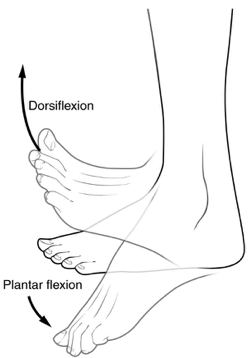
Figure 1. Dorsiplantar.jpg.
As shown above, dorsiflexion occurs when the foot moves toward the shin and is essential for walking, running, squatting, and climbing stairs. Plantarflexion occurs when the foot points away from the shin and is used during walking, running, jumping, and calf raises. Tight calf muscles can limit dorsiflexion, so improving both movements can help optimize squat form and reduce injury risk.
Why is Dorsiflexion Important?
Restricted ankle mobility can force your body to adapt in ways that stress joints like the knees, hips, and lower back. This can lead to poor movement mechanics and an increased risk of injury.
Restrictions in dorsiflexion usually stem from tight or weak calves or dorsiflexors, which help pull the knee over the toes.
How to Assess Your Ankle Mobility
Signs of limited ankle dorsiflexion may include and are not limited to:
- Excessive forward lean in a squat
- Heels lifting during a squat
- Low back pain while squatting
- Feet collapsing inwards (overpronation) when squatting, walking or running
- Pain or tightness in the front or back of the ankle
- Increased knee discomfort
Limited dorsiflexion may also contribute to:
- Shin splints
- Plantar fasciitis
- Patellofemoral pain syndrome, IT band syndrome, or generalized knee pain
- Achilles tendon issues
Kneeling Dorsiflexion Test
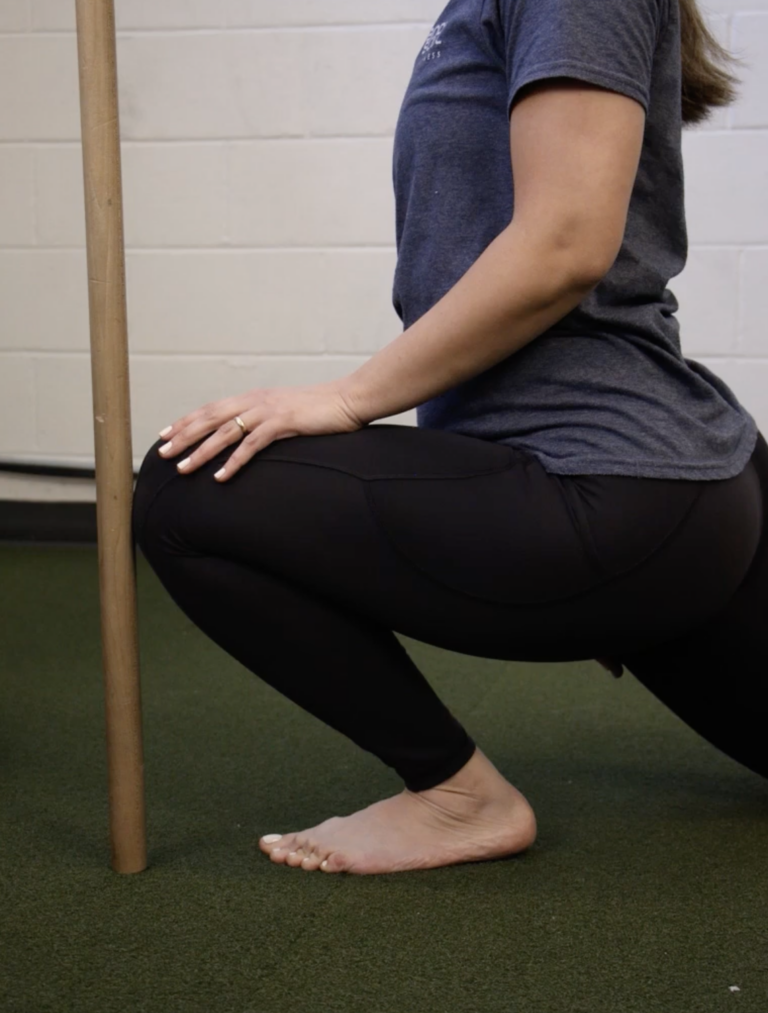
Your personal trainer can assess your dorsiflexion range with the Kneeling Dorsiflexion Test. In a half-kneeling position, drive your knee over your toes while keeping your heel planted, then measure the distance from your big toe to your knee on each side.
Ankle Mobility Exercises for Better Squats
To improve a joint’s ROM, we need exercises that target both flexibility and strength. Passive ROM improves with soft tissue release techniques, while active ROM improves with more dynamic exercises and strengthening.
3 Soft Tissue Release Variations
Start with soft tissue release to relieve tightness and prepare for active mobility training. Below are photos showing three soft tissue release variations: a sole-of-the-foot release with a lacrosse ball, a calf release with a massage ball, and a shin release with a foam roller.
Perform each variation for 30 to 60 seconds before strength training. These soft tissue release warm-ups improve range of motion, flexibility, and blood flow while reducing tension.
Lacrosse Ball Sole Release
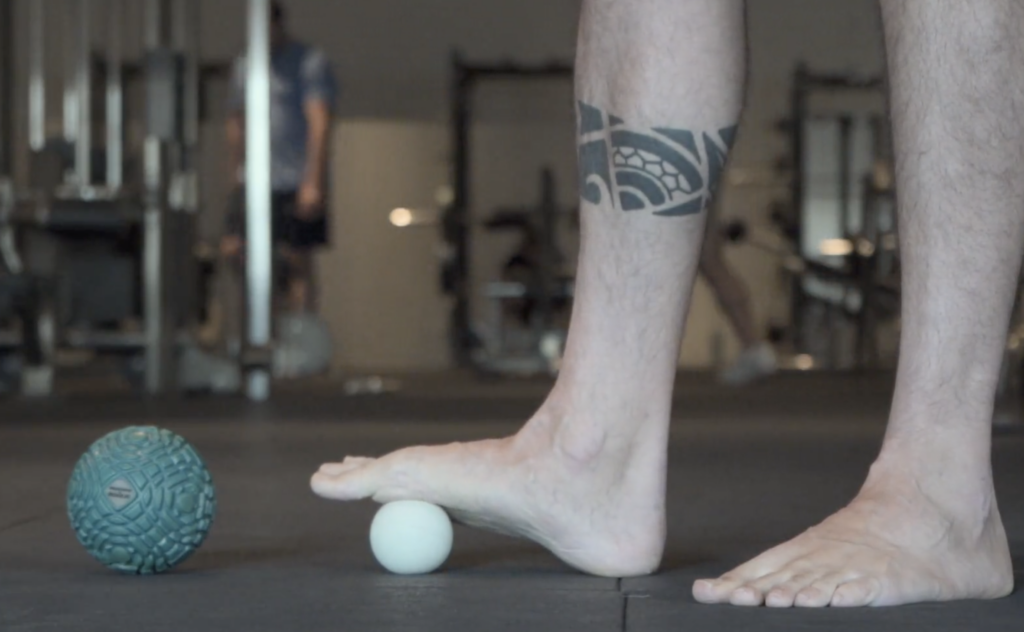
Targets the plantar fascia, a band of connective tissue on the bottom of the foot that connects to the calf muscles and Achilles tendon. Releasing tension in the plantar fascia can support better dorsiflexion during squats and other lower-body movements.
Calf Release with Massage Ball
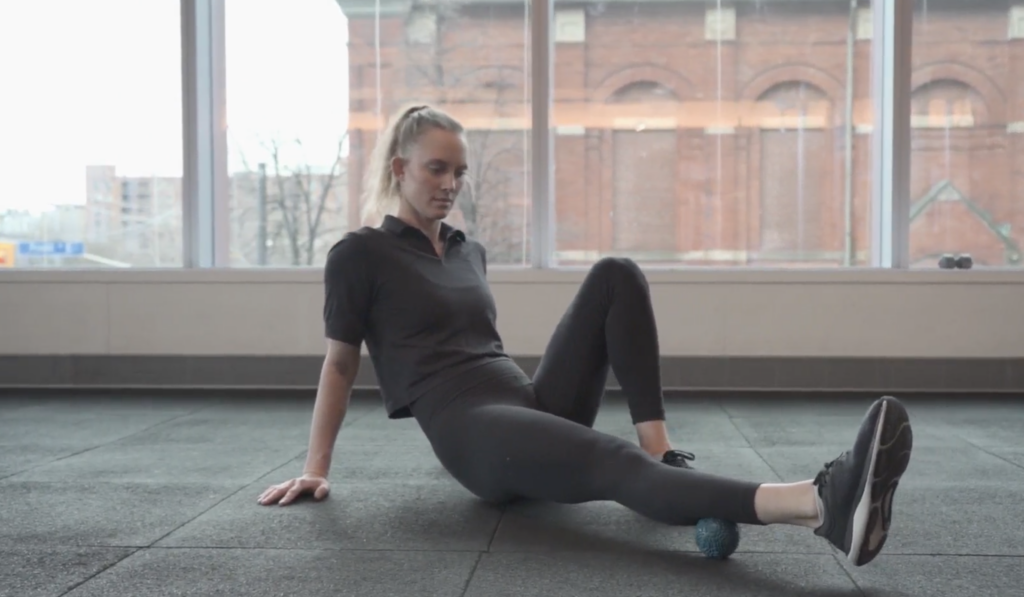
Targets the calf muscles, which play an important role in plantarflexion and dorsiflexion. Sit on the floor with a massage ball under your calf and gently roll your leg over the ball to release muscle tension. Take slow, steady breaths throughout the exercise, as tight calves can make this technique feel uncomfortable. Reducing calf tension can help improve ankle mobility and prepare the body for squats, lunges, and other lower-body exercises.
Shin Release with Foam Roller
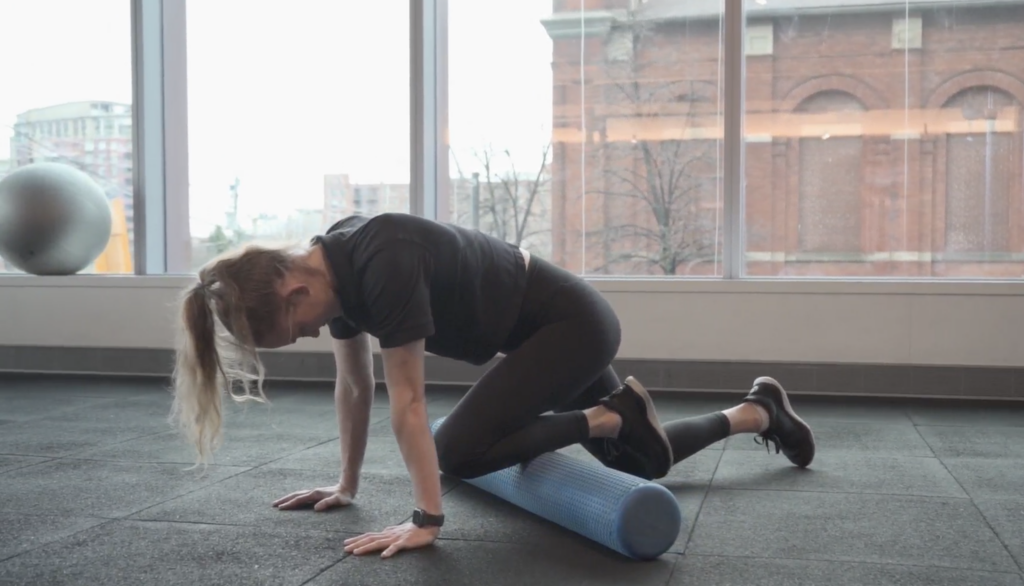
Targets the muscles along the front of the lower leg, including the tibialis anterior, which helps control ankle dorsiflexion. Start on all fours with your shin resting on a foam roller and gently shift your body forward and backward to massage the muscles along the shin. Focus on slow, steady breathing throughout the exercise, as this area can be sensitive when tight. Releasing tension in these muscles can help improve ankle mobility and support smoother movement during squats, lunges, and other lower-body exercises.
4 Mobility Drills for Your Squat Warm Up
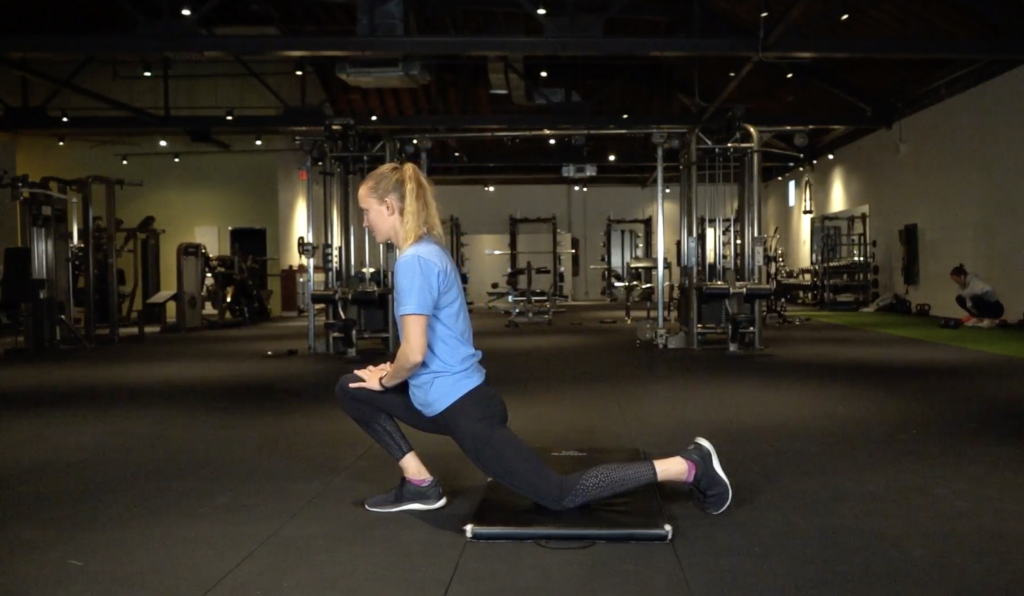
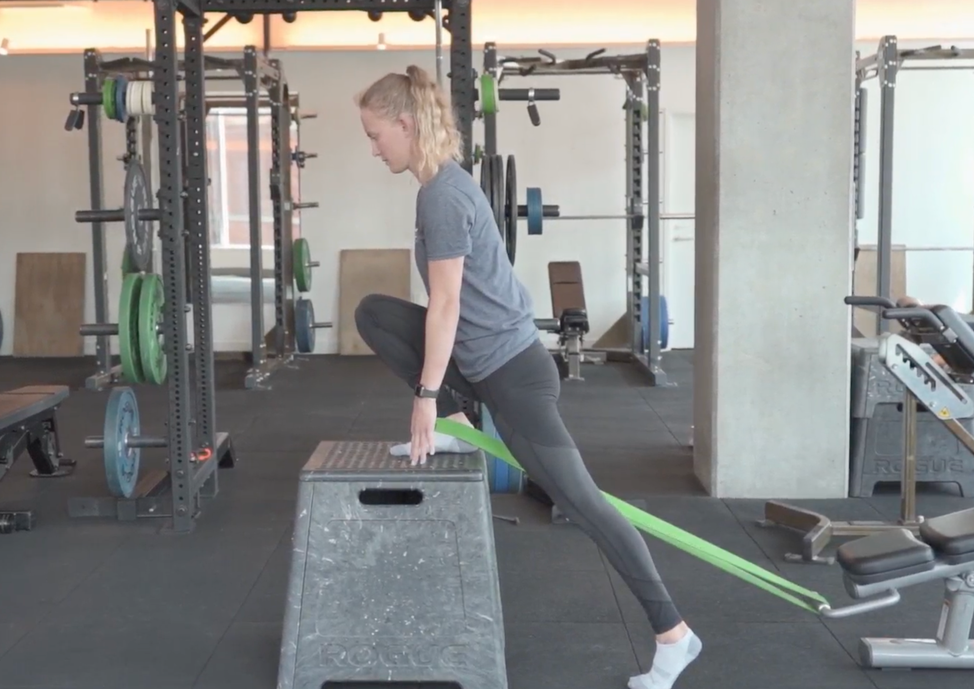
For these drills, aim for 2 sets of 12-20 repetitions per side or a 30-second hold per side before strength training. These drills can improve both passive and active dorsiflexion.
Half Kneeling Ankle Rocker
Banded or Cable Dorsiflexion
Single Leg Deficit Calf Stretch
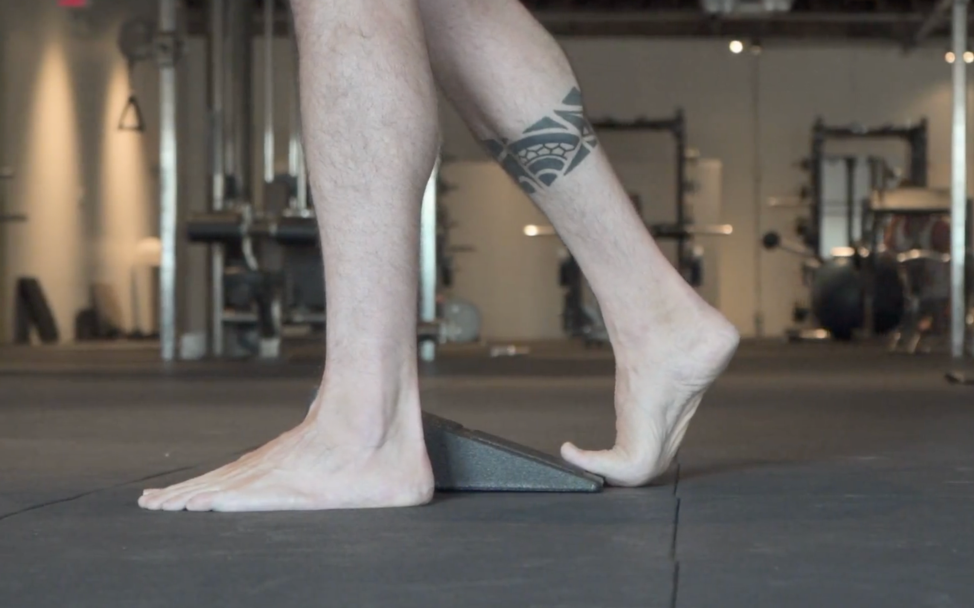
Big Toe Extension with Heel Wedge
Strength Training Exercises
These exercises can all be done within a variety of rep and set ranges but when trying to correct a pattern or improve mobility, you will likely get the best results sticking with a minimum of 3 sets of 8 to 10 repetitions with adequate time under tension. You may go higher in repetitions for exercises that have a smaller range of motion such as the forward step down.
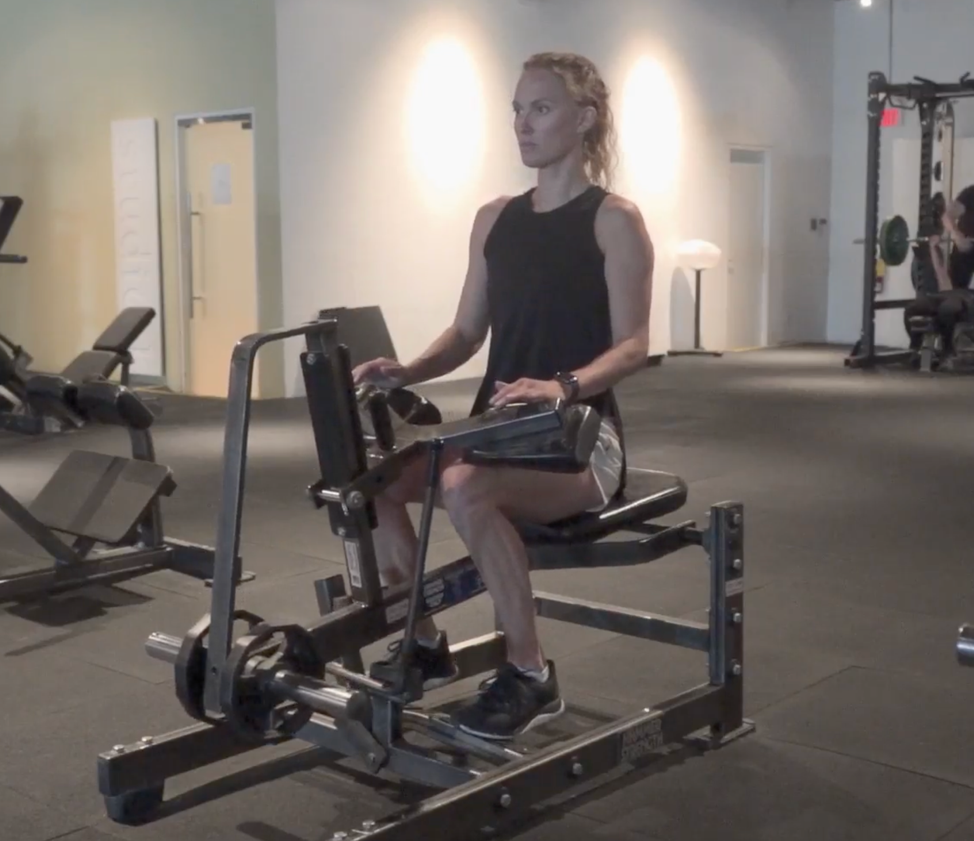
Seated Calf Raises
Front Foot Elevated Split Squat
Front Foot Elevated Split Squat builds strength in deep dorsiflexion positions and can be adjusted (by raising the front leg more) to accommodate your mobility.
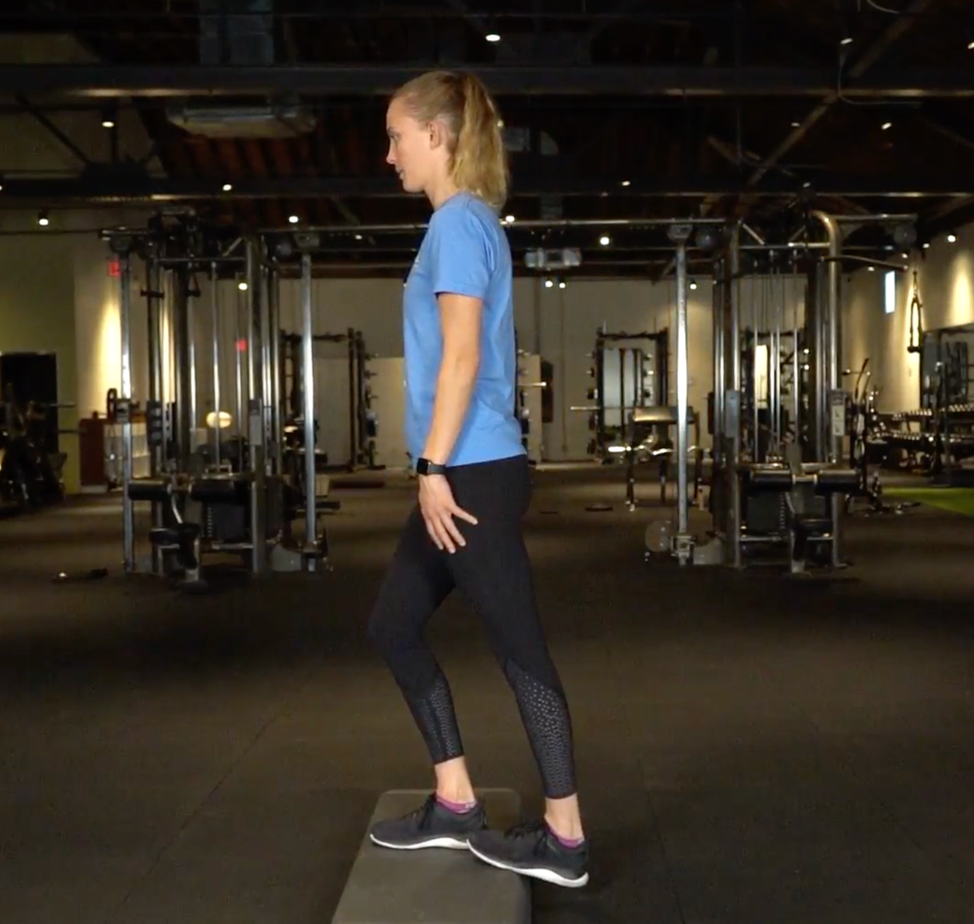
Forward Step Downs
Forward Step Downs directly work dorsiflexion while coordinating with the quadriceps muscles, improving the range of motion required for squatting.
Conclusion
Improving ankle mobility takes a combination of soft tissue work, mobility drills, and strength training. By consistently addressing restrictions and reinforcing new ranges with strength exercises, you’ll enhance your squat mechanics, reduce injury risk, and improve overall movement efficiency.
Explore our Mobility Training
For lasting flexibility, better movement, and injury prevention, our Specialized Mobility Personal Training is the next step. Work one-on-one with a certified personal trainer at one of our three Toronto gyms to unlock your full range of motion and move pain-free.
Putting knowledge into action often drives the biggest results. Whether you’re looking to build strength, improve mobility, support your health, or work toward a specific goal, our personal trainers and specialized personal trainers can help you create a personalized plan that fits your needs and helps you make steady progress.
About the Author
Amanda Morch is a Registered Kinesiologist and Head of Specialized Personal Training at Body + Soul Fitness. She specializes in running performance, mobility training, injury rehabilitation, and strength development, helping clients move better, feel stronger, and stay active for the long term. Amanda works with clients at our Front + Berkeley location in downtown Toronto.
References
[1] Figure 1. Dorsiplantar.jpg. From: http://cnx.org/content/col11496/1.6/. CC BY 3.0
[2] ISSA. Mobility vs Flexibility – What’s the Difference? [Internet] 2021 Aug 23. Available from https://www.issaonline.com/blog/post/mobility-vs-flexibility-whats-the-difference.