
What is Plantar Fasciitis ?
To conclude, exercising during pregnancy has many benefits to you and your baby if you are cleared to do so. Listen to your health care team and to keep them updated on how your exercise is going for you. And most importantly, listen to your changing body and do your best to give it what it needs. Here at Body + Soul Fitness, we work closely with health care teams and a network of professionals to ensure that you get the safest and most effective exercise program that is customized to you and your needs. Thank you so much for joining us and please don’t hesitate to reach out to us at Body + Soul Fitness to help you to get started on your journey today.
The next section will be hosted by my colleague Andrew, where he will cover post-natal exercise, benefits, guidelines and safety considerations. See you there!
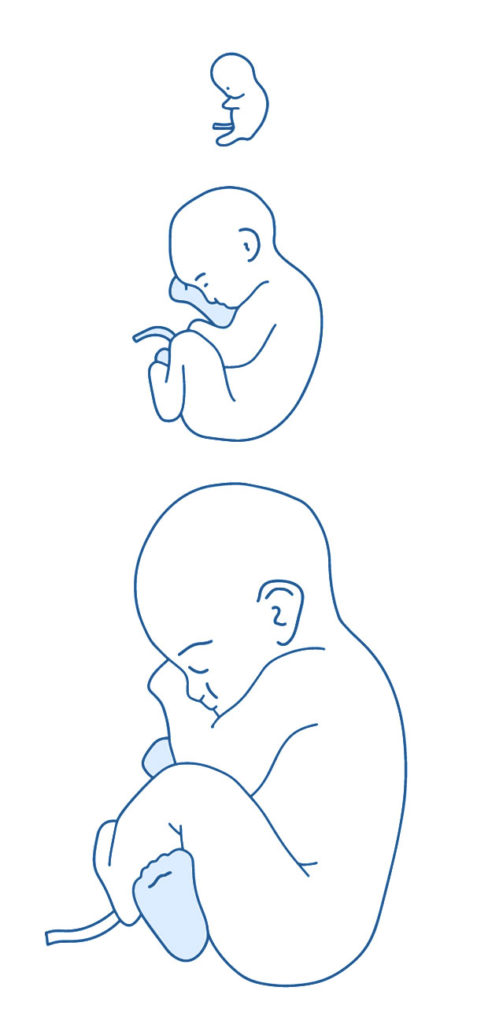
First Trimester
- Hydration is especially important as you are learning to regulate your body temperature.
- Exercising in a cool, temperature-controlled environment (avoiding exercising outside in the heat) is important throughout pregnancy but especially in the first trimester
- Nausea and fatigue may make it harder for you to exercise.
Second Trimester
- You may be able to increase exercise frequency and duration here compared to the first trimester due to less adverse effects.
- Avoid exercising in the supine (laying on your back) position.
Third Trimester
- Avoid exercising in the supine (laying on your back) position.
- Lower exercise intensity.
- Reduced complexity of exercise (e.g., limit overhead activities and unsupported exercises).

Amanda Morch
Share This Post
An introduction to prenatal fitness, what the workshop will cover and how it will provide you with the tools to safely exercise during pregnancy.
Amanda discusses the benefits, to you and your baby, of exercising while pregnant, and important safety precautions to consider.
During pregnancy, your body experiences many changes, some of which will affect how you exercise. In this section, Amanda discusses some of these changes, and how to adjust your workouts to safely account for them.
Amanda explores exercise guidelines for working out during your pregnancy including aerobic exercise, resistance training, mobility work and the Talk Test. She discusses what is safe to participate in and what exercises to avoid.
Concluding part 1 of the workshop, Amanda wraps up the prenatal section by highlighting key takeaway points.
An introduction to postnatal fitness, Andrew reviews what part 2 of the workshop will discuss and how it will provide you with the tools to safely exercise after pregnancy.
Andrew discusses timelines for when it’s safe to return to exercise, and considers the benefits of exercise post-partum.
Your body, after pregnancy, has gone through many changes and needs time before you return to full exercise exertion. Andrew explores exercise guidelines and a simple routine to follow for your post-partum workouts.
Amanda and Andrew conclude the workshop on fitness during and after pregnancy with a few final thoughts and considerations.